The Eames House is a beautiful continuation of space. The rooms are liberating, flowing into one another even between floors through the double-height spaces. Private and public spaces are not strictly divided. For example, the bedroom on the upper level overlooks the public living room with a short terrace that connects the rooms. There are no major divisions other than the separation of the two boxes, which still merge into one another with the courtyard. The house is an unrolling scroll of a Mondrian painting that exemplifies the use prefabricated materials to create beautiful endless space.
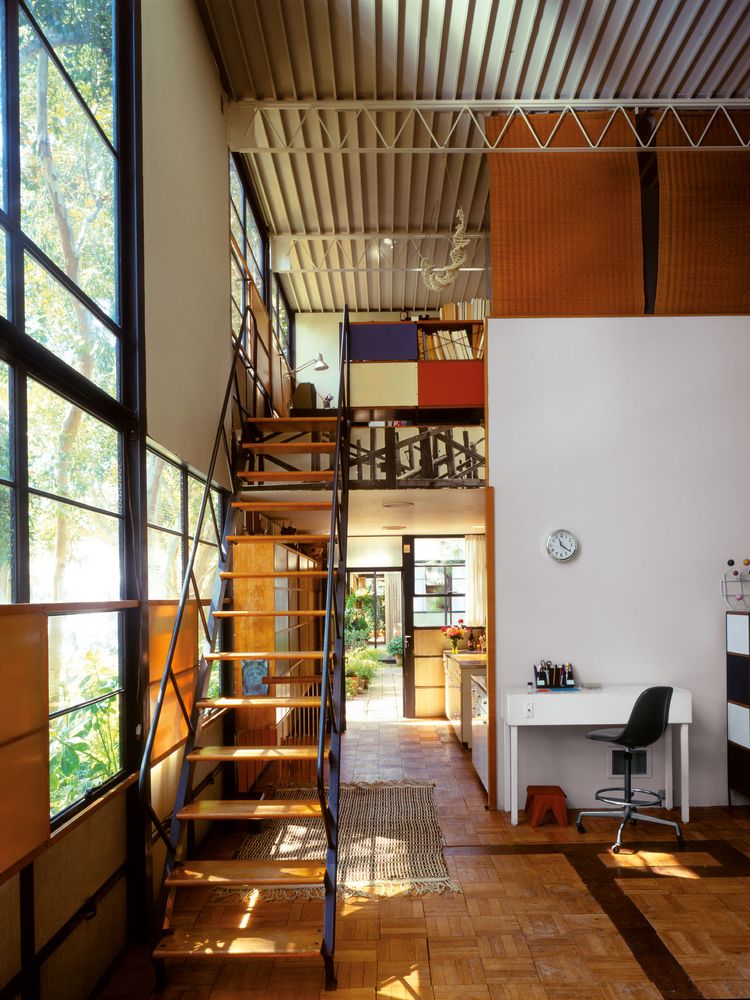
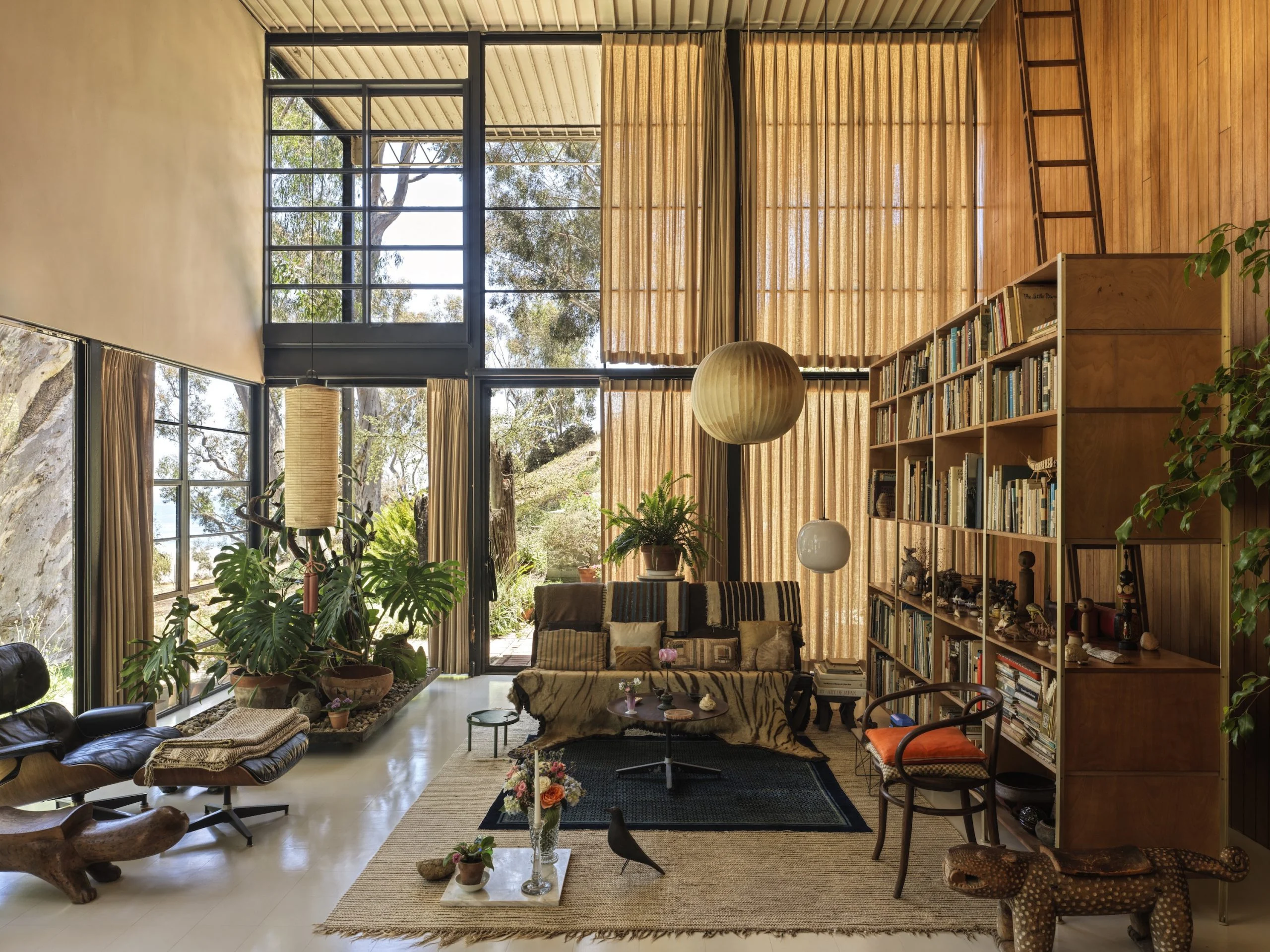
Furnishings in the Eames House act like tools for living rather than set pieces. Lightweight molded-plywood chairs (LCW, DCM), molded-plastic and wire side chairs, and low tables are grouped and regrouped for reading, work, or conversation. Colorful Eames Storage Units and the Eames Desk Unit bring order and serve as informal room dividers, echoing the facade’s grid in miniature. Textiles, baskets, folk art, shells, and prototypes sit comfortably alongside books and photographs, softening the industrial frame with layered, personal texture. The effect is an adaptable studio-home: warm, playful, and always ready to be rearranged as needs—and curiosities—change.